From Schwarz-Schilling to Schmidt: The tale of two Christians in Bosnia and Herzegovina

The last few weeks saw a peculiar circularity in international relations related to Bosnia and Herzegovina (BiH), an in particular the international community’s Office of the High Representative (OHR), which still fulfills its guardian function in the Western Balkan country. On 6th April 2026, Christian Schwarz-Schilling, High Representative (HR) between 2006 and 2007, died aged 95 in his German hometown of Büdingen, near Frankfurt. In mid-May, we learned that Christian Schmidt, who since 2021 occupied the HR post, was resigning, which had already been rumored in diplomatic circles the past few months. While history and political science will write two rather different accounts on the merits of their respective terms in the OHR, the way in which both men were de facto forced to leave office shares a particular commonality: the American factor. And a look at their terms offers us a way forward for the future of the OHR in BiH.

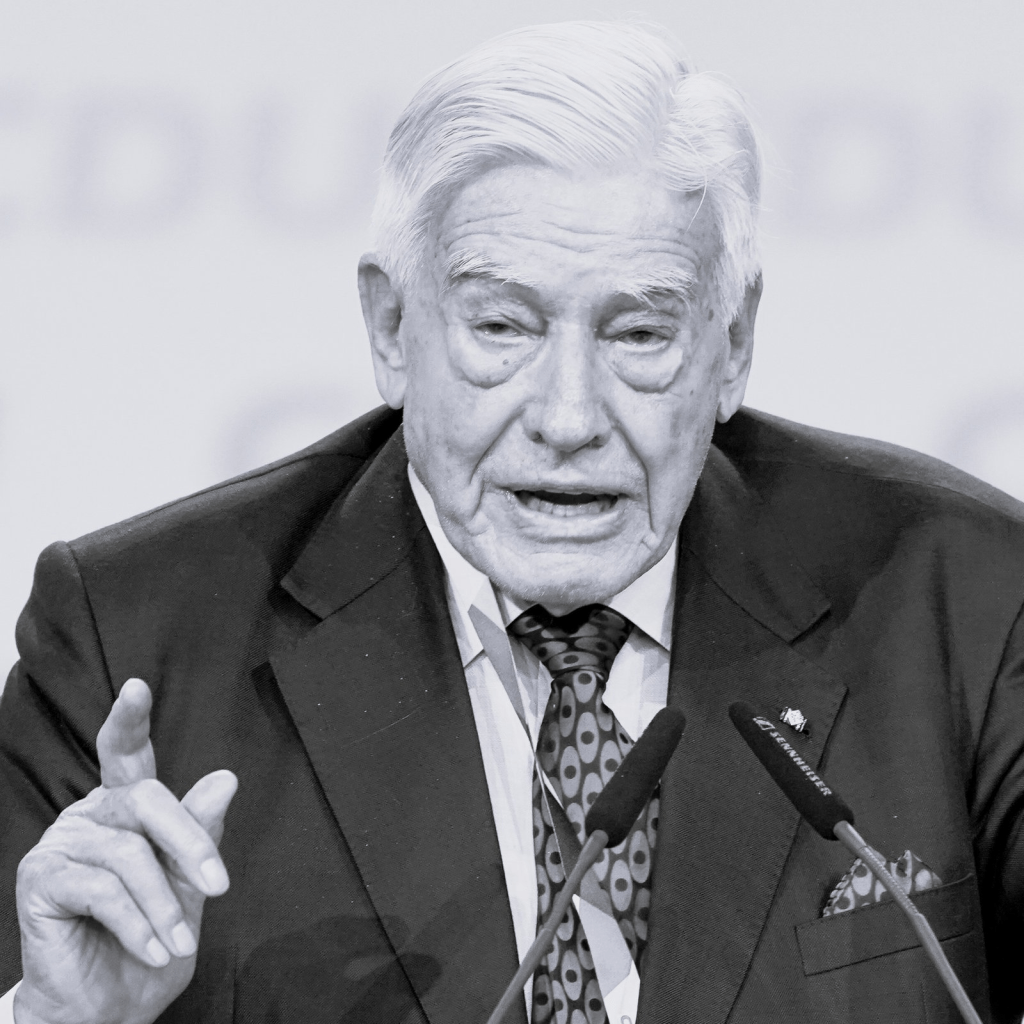
The tragedy of Schwarz-Schilling
When Christian Schwarz-Schilling assumed the Office of the High Representative in 2006, he followed a figure that to this day remains larger than life in Bosnian political history: Lord Paddy Ashdown. In policy terms, Ashdown had a significant impact on BiH’s post-war development: the introduction of a state-wide VAT, significant progress in terms of the establishment of the rule of law, the handing over of responsibility for refugee and property return to the Bosnians, the unification of the armed forces under the command of the central state presidency, and the general strengthening of the common state structures are among his major achievements. Even if largely inaccurate, it is commonly assumed that Ashdown achieved all these things by using the so-called Bonn powers, the HR’s right to directly intervene in the country by imposing new laws or removing from office elected politicians if he sees fit. One does not need to debate the merits of such a claim–I’ve done that elsewhere–but one needs to acknowledge that when Ashdown left the office in 2006, the general impression was that the country was largely functioning and on the way to be self-governing rather soon. And it is this impression that became the nucleus of Christian Schwarz-Schilling’s tragedy.

When Schwarz-Schilling assumed office, the Bosnian magazine Slobodna Bosna wrote in a headline: ‘the administrator goes, the friend comes’. Indeed, Schwarz-Schilling was known to the Bosnian public due to his engagement as the international community’s mediator for the Federation between 1995 and 2004, his humanitarian actions in the country during the war, and especially his resignation from the cabinet of Helmut Kohl in 1992, explicitly stating that he would be ashamed to be part of the cabinet if inactivity in the Balkans prevailed. Schwarz-Schilling was an elder-statesman type of politician, respected by many in the country and generally well-received. Remember, this was the time when the April package, a set of reforms to the constitution and the structure of the Dayton Peace Agreement, seemed possible and people like Milorad Dodik, the at the time future and currently former president of Republika Srpska was still in opposition and not the nationalist hardliner he would later become.

Schwarz-Schilling assumed the post fully willing to be the last High Representative in Bosnia–a prospect particularly promoted by the administration of George W. Bush. At the time, the US found itself engaged in two wars following the attacks of 9/11. While the war in Afghanistan in 2001 had generally been backed by the international community, the war in Iraq proved to be a quite controversial endeavour, with especially Germany and France opposing it. The US administration needed a case for international intervention gone well, and Bosnia was to become that poster child. The Dayton Peace Agreement ended the war in 1995, the international community entered the country in 1996, quasi-governed it until 2006, and now, ten years later, the country was self-sufficient and the international community could leave. Bosnia was to provide the blueprint of an exit strategy for the US interventions in Afghanistan and Iraq. A success story proving the long-term strategy right.

But if Bosnia was to be self-sufficient, Schwarz-Schilling concluded, that meant that the country could not be run by the OHR. It meant, in his mind, that the concept of ownership, first promoted by his predecessor Wolfgang Petritsch in 2001, was to be taken seriously. Gone was the Ashdown approach of imposing political reforms. The HR could provide cover for negotiations, he could cajole and mediate, but it was not up to him to decide. As he told me when I met him in Germany in 2012,

I said to the local politicians: ‘Ownership is the rule! You are the ones [to decide] and I will only intervene if there is a danger for the people, or if some issue becomes os big that I deem it necessary to prevent further harm. But [I will] always [intervene] in a way, which allows you to correct my decisions if you deem them wrong.’ And you see, I thought such intervention always as some sort of educational process. And such a process was badly needed in my opinion. But the international community was unable to understand what that meant.

The failure of the April package opened up the opportunity for Milorad Dodik to embark on a nationalist electoral strategy. During the subsequent election campaign, he openly threatened with secession, a trope that would become standard in all subsequent campaigns. The international community, used to Bonn power interventions by Ashdown, urged Schwarz-Schilling to intervene. But Schwarz-Schilling stuck to his educational approach. In a democracy, he believed, you may say whatever you want, especially in election campaigns. Talk is not punishable, only actions are. So, he made it known that rhetoric would not provoke any action from his part, but any concrete steps towards undermining the state would.

When Dodik’s strategy proved successful and he won the 2006 elections with his nationalist rhetoric, he had the Republika Srpska parliament pass a resolution that there would be a referendum on independence if the abolition of Republika Srpska remained on the negotiating table. His red line having been crossed, Schwarz-Schilling wanted to act and remove Dodik. But the international community saw him legitimised by the elections and directed Schwarz-Schilling not to intervene. As Schwarz-Schilling told me, it was particularly the US and UK administrations that wanted him to remain silent—not just because of the electoral result, but also because of the situation in Kosovo, where negotiations were on the way that would lead to the country’s independence. ‘If one wanted to make progress there, one could not open a new front here.’

Within a little more than a year after Ashdown left, Bosnia had a secessionist politician in charge of Republika Srpska, a failed constitutional reform package, and an HR that was not willing to intervene in daily politics, thus effectively provoking political stalemates. The success blueprint of international intervention was in danger. While the international community could not (or would not) change the first two of these things, the international community could change the third: Early in 2007, it was leaked that Schwarz-Schilling was to leave the post, essentially making him a lame duck. His mediated, ownership-focused approach was not what the international community wanted to see. Schwarz-Schilling felt sabotaged by the international community, especially by Germany’s inaction in this regard. The secret negotiations he started with the local politicians after the failure of the April package stalled, as he was forced to leave. The question remains what could have been if the international community had accepted his approach. In Schwarz-Schilling’s words: ‘Stupid as it may be to say this now: the country of Bosnia and Herzegovina would have become a different one if I had three more years.’

The inaptness of Schmidt
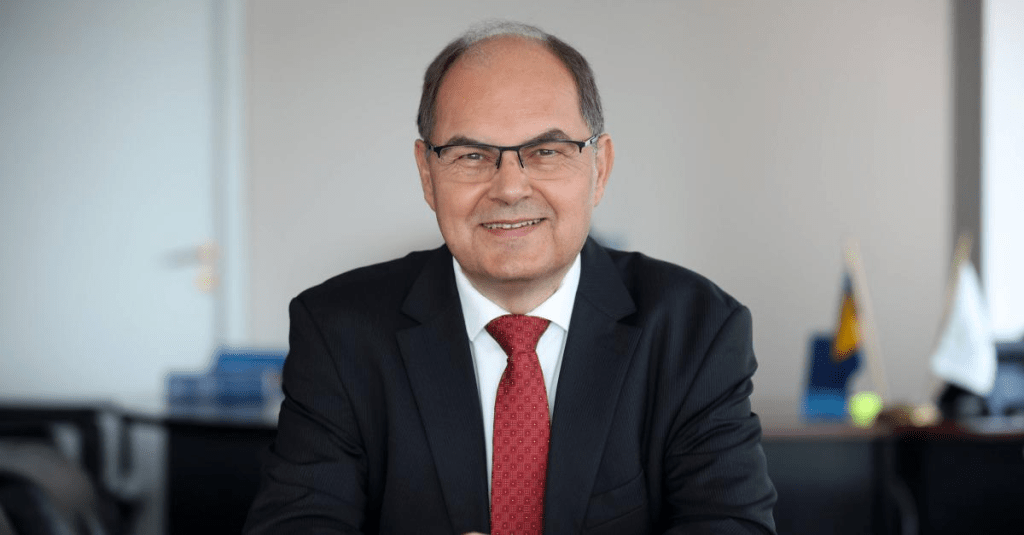
Whereas Christian Schwarz-Schilling had been greeted by Bosnians as an elder statesman and friend in 2006, when Christian Schmidt assumed the OHR in 2021, there were no such feelings of familiarity. The general impression was that the former German agriculture minister had been sent to Bosnia to be removed from German politics, following his controversial vote to allow Glyphosate in the EU. Furthermore, his close associations with Croatia and the Croat HDZ party, which is a member of the European People’s Party in the European parliament, just linke Schmidt’s CSU, raised concerns about Schmidt’s neutrality in the post. Lastly, questions about his temper soon emerged, especially when he verbally attacked a journalist during a press conference in Sarajevo. Put mildly, his critics describe Schmidt as an inapt diplomat who favours the Croat position.

At the time Schmidt assumed office, his predecessor Valentin Inzko had effectively made the OHR a lame duck, an institution that did not actively intervene in the country’s politics anymore, but limited its engagement to ‘expressing concern’ when dangerous political situations arose. As one politician told me at the time: ‘We like hanging out with Inzko, but politically, nobody takes him seriously.’ This lead some–me included–to ask what the point of the OHR was at all. This would definitely change with Schmidt, who restored the OHR and especially the Bonn powers to the former glory of the Ashdown years.

Between 2011 and 2021, the OHR had effectively not used its Bonn powers to any meaningful degree. The only decisions between 2011 and 2014 concerned the restoration of rights to people formerly targeted by Bonn power decisions, and since 2014 there were no decisions at all. Between 2021 and 2025, however, Schmidt imposed no fewer than 26 Bonn power decisions. The OHR was back, big time!

The most significant decisions centred on two specific issues: elections and Dodik.

In 2022, BiH was called upon to elect new parliaments on the state, entity and cantonal levels. Deeming the country essentially ungovernable due to consistent political stalemates, Schmidt has sought to amend the Election Law by domestic consent prior to the elections. His negotiations failed, however, as his proposals were deemed to favour the Croat electorate, particularly the HDZ, disproportionally. In addition, changing the Electoral Law after the list of candidates had already been submitted, was highly undemocratic and unusual. As I told Der Standard at the time, you cannot change the rules of the game once it has begun. How wrong I was, for Christian Schmidt proved that in a member state of the Council of Europe and a state aspiring to become a member state of the European Union thus committed to the Copenhagen criteria of democracy and rule of law, you could actually change the rules even on election night.

As the polls closed on Election Day, Christian Schmidt addressed the citizens of BiH to congratulate them on going to the polls. Additionally, he told them that while all their votes will be counted, he had decided to change the way in which indirectly elected or delegated legislative positions in the Federation are allocated. In other words, he had changed how votes transferred into seats and thus how voting impacts representation in the legislature. A move so blatantly undemocratic that it beggars belief. Regardless of the content of the changes–which some saw as benefitting the nationalist elites, above all the Croat HDZ–changing the Electoral Law after the votes had been cast and not yet fully counted should not be possible, not even for a body like the OHR. Later on, Schmidt would directly intervene in the government formation in the Federation entity by suspending the entity’s constitution for a day so that a new government could be formed. The long-term effect of undermining the democratic character of the country, and the Dayton Peace Agreement itself, cannot be overstated. This is a move that was not even necessary in 1996, when the first elections were held under much more dangerous circumstances.

The second set of significant impositions concerned changes to the Criminal Code, which aimed at criminalising the incitement of violence, the glorification of war criminals, bribery in elections as well as the failure to implement decisions enacted by the High Representative. This set of changes was what ultimately allowed the Bosnian institutions to remove Milorad Dodik from office. After the Republika Srpska parliament had passed a resolution rejecting decisions by the HR and the HR had annulled them, Dodik went on to nevertheless sign the resolution into law. This opened up the opportunity for a two-year long criminal case against him, at the end of which he was convicted for failing to obey the OHR decisions. While Dodik was able to substitute his prison sentence with the payment of a fine, the court’s prohibition against holding public office meant that he was effectively removed from office. After a few tense months, Dodik accepted his removal; shortly afterwards, the US sanctions that had been imposed against him in the past, were lifted. Up to this day, however, Milorad Dodik remains one of the most influential politicians in Bosnia and Herzegovina, despite his formal removal from power.

The reasons behind Schmidt’s resignation are not entirely clear at the moment. What seems certain, however, is that there was big US pressure for him to be replaced. One reasons behind this pressure might be the constant lobbying pursued by the Dodik administration in the US, not least as a result of Schmid’s actions that ultimately led to Dodik’s downfall. Another reason might be Schmidt’s opposition to a pipeline project linked to people close to the US president. History will tell.

Why we need a new strategy for the OHR

Whatever the reasons behind Schmid’s resignation, like with Schwarz-Schilling, US pressure and German abstention sealed the fate of the second German High Representative in Bosnia and Herzegovina in the end. Schwarz-Schilling had sought to take the concept of domestic ownership seriously, while Schmidt had sought to impose policy he saw as necessary. Both approaches failed, but while Schwarz-Schilling’s had at least the dialectical potential of advancing the country and was teleologically aimed at installing democratic values, Schmidt’s reforms did serious harm to the concepts of democracy and democratic legitimacy, while his apparent or perceived partisanship damaged the credibility of international engagement in the country.

So, what is the conclusion we need to draw with respect to the OHR and its future? I’ve long been critical of the OHR’s contemporary role, even if I could never bring myself to advocate its permanent closure. Today, as we face a world dominated by realist international politics in which the strongest players need not obey by any principles anymore, the OHR seems, at best, a relict from a distant, Fukuyama-inspired past and, at worst, a direct instrument of international power politics à la Mearsheimer and Co. Both options are not a very good prospect for the country.

Some argue that the OHR has a role to play as long as the Bosnian political system harbours the possibility for blockades by domestic politicians; the HR is needed to overcome such domestic stalemates. But at the heart of such an argument stands the negation of any kind of agency for the domestic political elites. They are not incapable of reaching compromises due to the political system; they are incapable of reaching compromises because the costs of inaction inexistent. Neither electorally nor in terms of finances are they punished for inaction. It seems clear that the days of the OHR are numbered. Both democratically and politically, such an institution has long outlived its legitimacy. Politically, as the past few years of renewed Bonn power action show, the OHR has very little to show for. Dodik is out of office, but still in power. And in terms of policies, one struggles to find anything worth mentioning as an achievement.

So, yes, the OHR must close. But before it does, it needs to make one final imposition: The tying of the disbursement of state funds to politician and other public official to legislative activity. The idea is simple: Without political agreement, say, on the budget, the political actors are starved of income. Unlike in the US, this should not be an overall state shutdown, but a targeted action. Here, Christian Schwarz-Schilling offers a blueprint. When eight months after the 2006 elections, there still was no government formed in the Herzegovina-Neretva canton, to which the city of Mostar belongs, he issued a decision suspending the disbursement of party funding to the involved parties from state and entity budgets. The larger parties lost 40% of the funding, the smaller 20%. Additionally, the decision contained a provision that party funding would be cut by a further 40% and 20%, respectively, if a government was not formed within ten days. In the end, this strategy proved successful.

If one were to apply a similar principle to the entire country and integrate it into the existing body of legislation, political stalemates would become costly. Moreover, one would create a new institution for overcoming deadlocks, properly anchored in domestic legislation. Naturally, this is not a panacea for all of BiH’s problems, but it would allow the OHR to be phased out.

Maybe that is the best conclusion we can draw from the fate of the two German Christians in Bosnia and Herzegovina.
EU Leaders to Western Balkan Reformers: You’re on your own!

The European Council’s decision not to open formal accession negotiations with North Macedonia and Albania today might go down in history as one of the most ill-advised policy decisions the EU has ever taken with respect to the Western Balkans – and that is quite something considering how contested that particular field is. Today, the Council did not just change a particular policy, but betrayed one of the fundamental principles of the European Union: the adherence to the pre-set rules of the game. Since today, at least from the Western Balkans perspective, the EU is no longer a “rules-based order”, but has become part of “politics as usual”.

Granted, there are good reasons for not taking this step today. Everybody knows that the accession process, as it is currently conducted, suffers from some major problems. That the countries of the Western Balkans could have progressed on their path towards EU membership in recent years while at the same time the quality of their democratic systems backslided and illiberal and authoritarian politics became ever more dominant, points to just one of the challenges the current system faces. Also, the role of parliaments, the civil society, and the power asymmetries involved in the process need to be looked at. Furthermore, the quintessential formula of democracy, human rights, and the rule of law needs to take a more prominent position in the entire enlargement process––something even the “fundamentals first” approach adopted by the Commission has done only to an insufficient degree.

All this is well known, and all of it is correct. But what makes today’s decision so colossally misguided is the fact that the EU broke its word. For years, it has been telling North Macedonia that it will progress on its path towards the European Union and benefit from all the goodies of being a candidate country if it only found a solution with Greece with respect to the name issue. North Macedonia delivered: its voters ousted the old government, the new government agreed to the historic Prespa agreement with Greece and changed the country’s name. True to its word, the EU Commission recommended to reward these efforts with the candidacy status.

And now? What kind of signal does the decision of the EU Council send? That you cannot trust the EU. That their words are not worth anything. That the Commission is not empowered to speak in the EU’s name.

Think about it. For years now, the EU has been saying that the political, economic and social systems in the Western Balkans are in need of reform. The domestic politicians agreed and committed themselves to the process; yet they also know that, for them, the current system actually works quite well. They benefit from all the shortcomings in the rule of law, or from being able to sustain large patronage networks by exploiting state resources. So, while they pay lip-service to enlargement, they don’t really want to reform and thus cut off the hand that feeds them and their networks. It is for that reason that the EU has been the only true driver of reform. And because even the domestic politicians know that every now and then they have to show some progress, they reformed gradually, though never fully, and sometimes not even substantially. The only constant in this story has been the EU, and some have put their hopes in Brussels actually helping them and supporting their efforts to make the domestic elites comply with those values the EU stands for and has listed in Article 2 of the Treaty.

After today, those fighting for change, those wishing to see genuine reform and progress will have heard the EU’s message loudly and clearly: you are on your own!

A few thoughts on the contemporary role of the OHR in BiH

IMG_2306.jpg
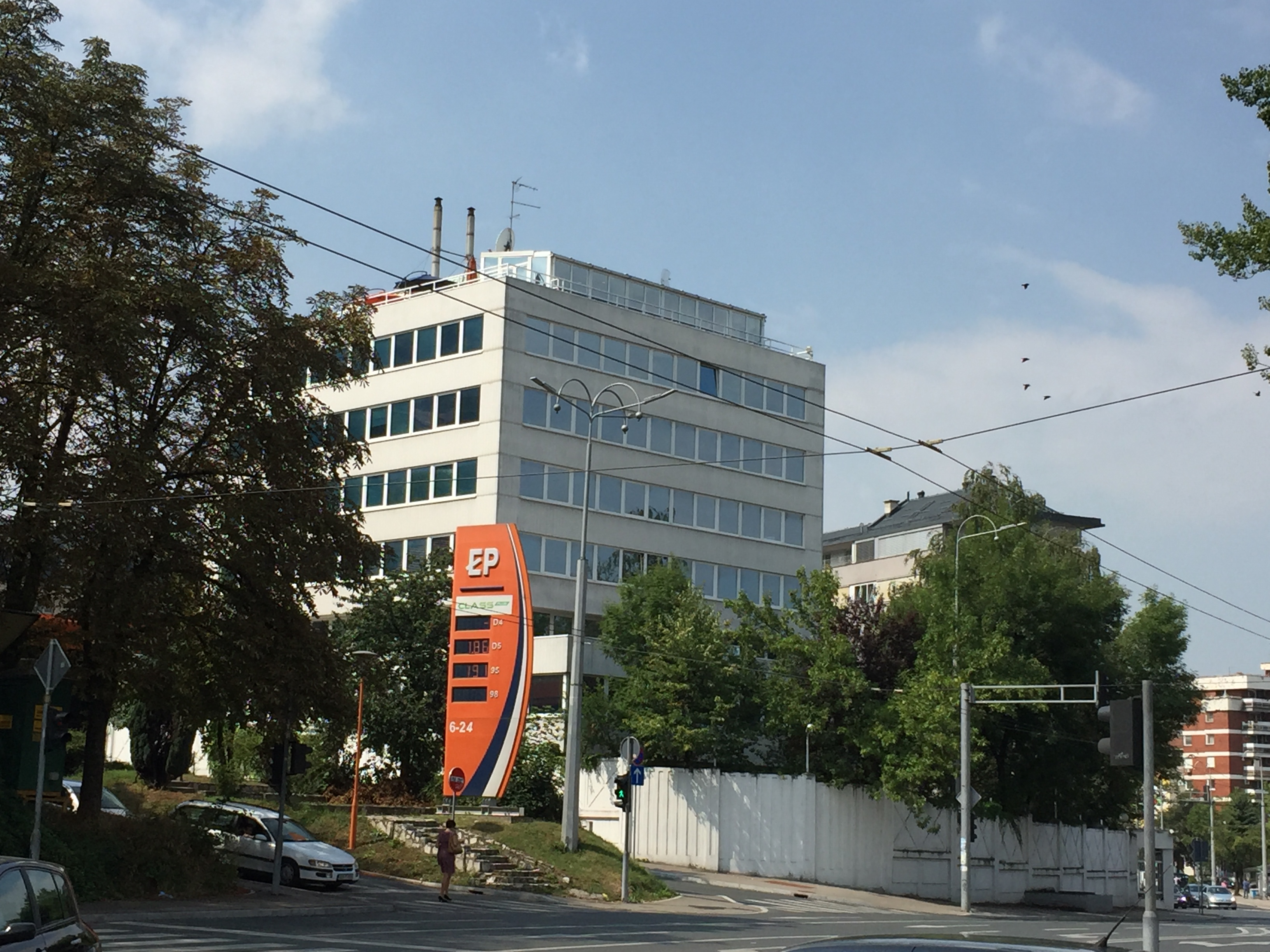
The Office of the High Representative Building in Sarajevo.

During a recent trip to Sarajevo, I met an MA student doing research on the Office of High Representative (OHR) in Bosnia and Herzegovina (BiH). Having written my PhD dissertation on that subject, I was intrigued by the angle the student wanted to pursue: the OHR’s contemporary role in the European integration process. The double-hatting of the OHR as the European Union Special Representative having ended in 2011, instinctively I dismissed the idea of the OHR having any role to play in this area any more. But then the student said to me: “But surely the fact that there still is an OHR in Bosnia has to mean that it has some effect, doesn’t it?”

A rather intriguing question, I must admit. Whenever I am asked about the OHR’s contemporary role at talks or lectures, I usually, first, facetiously say that the institution’s standing has evolved from a political power player with amazingly far-reaching decree powers to being the international hub for “expressing concern” with political developments, as the OHR regularly does in its press statements. Secondly, I then explain that the times of the OHR actively intervening in daily politics so as to resolve or decide political issues by using its decree powers (the so-called Bonn powers) have long been over. In 2015, I wrote in an op-ed that “as a tool for resolving political issues, the Bonn powers have been dead for quite some time”, putting forward three arguments why this is so.

Firstly, there is no more unanimity among the international members of the Steering Board, the overseeing board of the OHR, with regards to a common course of action or strategy. With diverging opinions prevailing, the OHR is incapable of actually formulating and implementing a robust, interventionist policy. Secondly, the OHR lacks significant political and personnel resources to actually implement its decisions, even if it could find unity to take them. And thirdly, I warned that the Bonn power’s continued existence, despite its presumed practical ineffectiveness, may prevent a stronger course of action from international actors, as the powers provide some sense of security that certain events will not occur.

Re-reading my piece today and disregarding its somewhat alarmist tone (I guess I wanted the piece to be a wakeup call for internationals at the time), I think the analysis of the OHR’s position still largely holds true. The Steering Board is nowhere nearer to a unanimous position, or strategy on the OHR’s future. In fact, quite the contrary seems to be true. People involved in the inner workings of these things will tell you that there is no real agreement on whether the institution should continue after Valentin Inzko, the current High Representative, leaves office––let alone on who should succeed him. This might be one of the reasons why Ambassador Inzko is still not retiring, despite persistent chatter among the Sarajevo čaršija that he actually wishes to do so for some time now. The OHR seems to have become one of these institutions caught up in the geopolitical triangle of EU, US, Russian, and Turkish influences on the Western Balkans.

The second point seems even stronger today than it was in 2015. Let us start with the personnel. As Valentin Inzko said in his latest report to the UN Security Council in May 2019: “Since the beginning of my mandate in 2009, the budget of the Office of the High Representative has been reduced by 53 per cent and my staff by over 58 per cent. Resources must follow the mandate and, as there is still work ahead of us, further cuts would take us beyond streamlining. Without the appropriate level of resources, the capacity to fulfil my mandated responsibilities, implement the Dayton Peace Agreement and fulfil the conditions for closure is restricted.” The staff situation seems to have become so dire that, according to some admittedly unconfirmed rumours I have heard, the OHR has started renting out not needed office space in its building to commercial companies. The EU’s EUFOR mission, which succeeded the NATO Implementation Force in 2004 with its Operation Althea, has seen similar staff and budget reductions. Originally a force of some 7,000 troops, troop levels were first decreased to 1,600 in February 2007, and ultimately to some 600 troops following a further restructuring in 2012.

IMG_3055.jpg
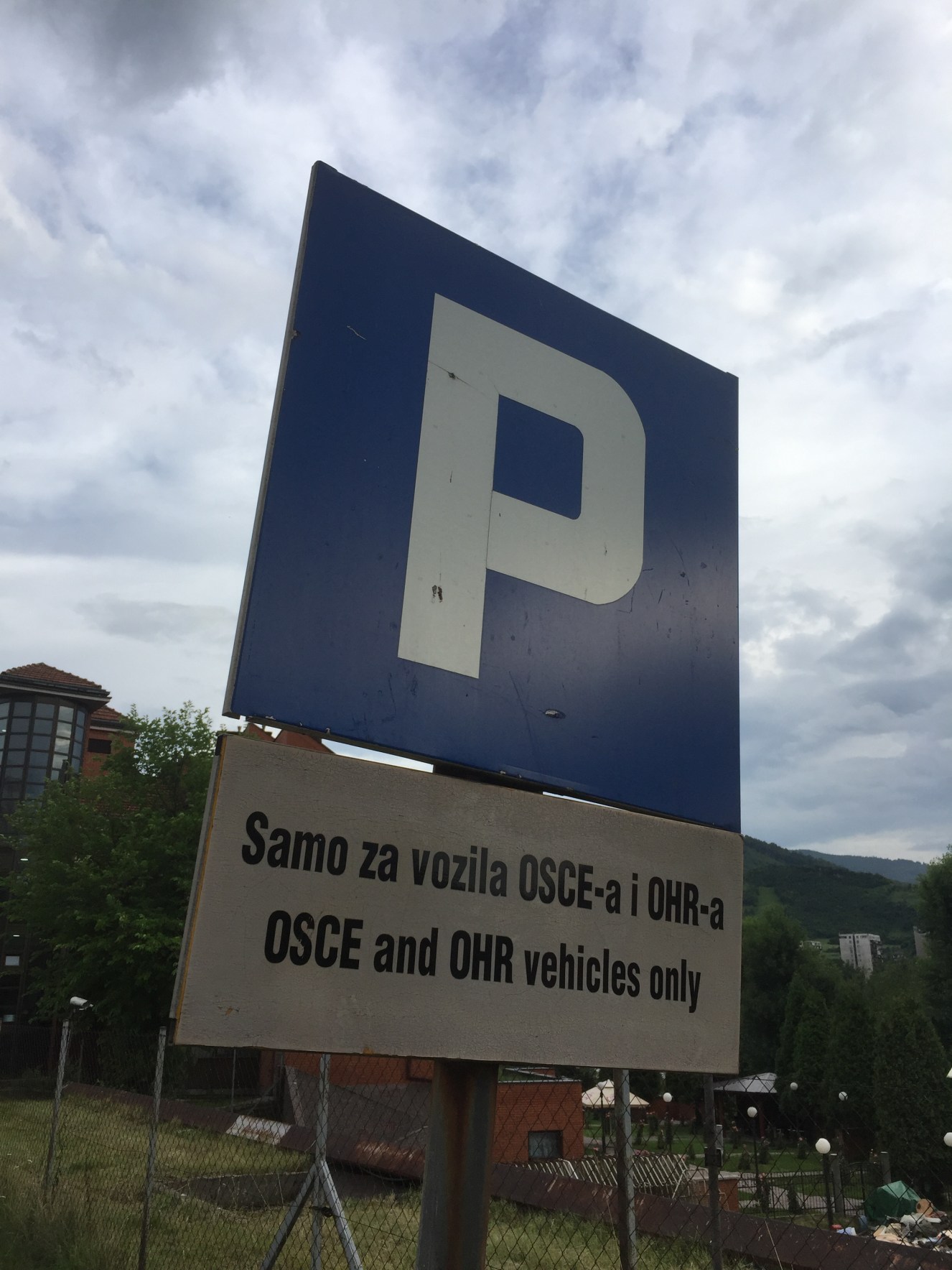
Reminders of another time, when the OHR enjoyed certain privileges (Zenica).

EUFOR is thus not in a position to act as a supporting power should, for example, an OHR decree not be implemented by domestic actors. And the High Representative is not in a real position to effectively discharge the duties of its office. Nobody knows what would actually happen if the OHR were to remove a politician from office or decree a law. The most probable course of action would be that such a decision is ignored or not implemented by this or that side, producing a massive headache for the international community and raising serious questions about the effectiveness and legitimacy of the OHR. As nobody seems to be willing to open that particular can of worms, inaction becomes a dominant strategy, and press releases expressing concern the preferred modus operandi.

However, there are also voices that say that the OHR is still heavily involved in daily politics, not so much with respect to the agenda of the domestic politicians, but with respect to the actions of internationals. Apparently, there are regular consultations and exchanges of views, and not least the reports certainly show that the OHR is closely following the domestic developments. Yet, is this enough? Where’s the value added of such an action that could easily be performed by institutions without the singular distinction of having far-reaching intervention powers?

So, we arrive at the inevitable question that this piece was always bound to end on: should the OHR be closed?

There are those who see the OHR as a kind of safety net––an institution with legal and political legitimacy to intervene that could be invoked if things turn badly. Some say that it’s precisely this role that prevents even more disastrous things from happening, as it curtails destructive domestic action, even if it cannot curtail rhetoric. I do not wish to dismiss the security argument, as it’s really difficult to assess an institution’s impact based on an eventuality that might or might not occur one day without making a lot of assumptions. I just have the feeling that the OHR’s contemporary impediments have made it more of a lame duck than an effective deterrent for destructive action and politics. The political elites don’t give the impression that they see the threat––or benefit––of the OHR, apart from some rather vague notion that it might step in when push comes to shove. It is mostly employed as a rhetorical tool, not a real force.

In addition, if the OHR’s mandate is to ensure the completion of the 5+2 agenda, the trend seems to be going in the wrong direction. BiH seems today far away from being a “peaceful, viable state irreversibly on course for European integration”, as the agenda designates the ultimate goal. NATO accession is more contested than it has ever been in the past ten years and EU integration is far from a given. In fact, the assessment report on BiH’s readiness to join the EU outlines a plethora of necessary structural changes before the country can be considered ready for negotiations, let alone membership. Furthermore, judging by all relevant metrics for measuring the quality of democracy, Bosnia and Herzegovina has deteriorated in recent years.

If the OHR still has a role to perform, it is hard to see what that role actually is. It is hard to see whether any role can be performed effectively. And it is hard to see what results the OHR has to show for in the past ten years. We are thus left with a rather vague notion of an eventual security net, and the fact that the OHR regularly makes BiH a topic at the UN Security Council through its reporting. This has to be weighed against the effects it has as a projection area for hopes or hatreds of the domestic political elites as well as the international community. If one were interested to undertake such an assessment honestly, I am not sure that keeping the OHR open would be a foregone conclusion.

“Dayton is our foundation, it cannot be our ceiling” – On Paddy Ashdown’s legacy for Bosnia and Herzegovina

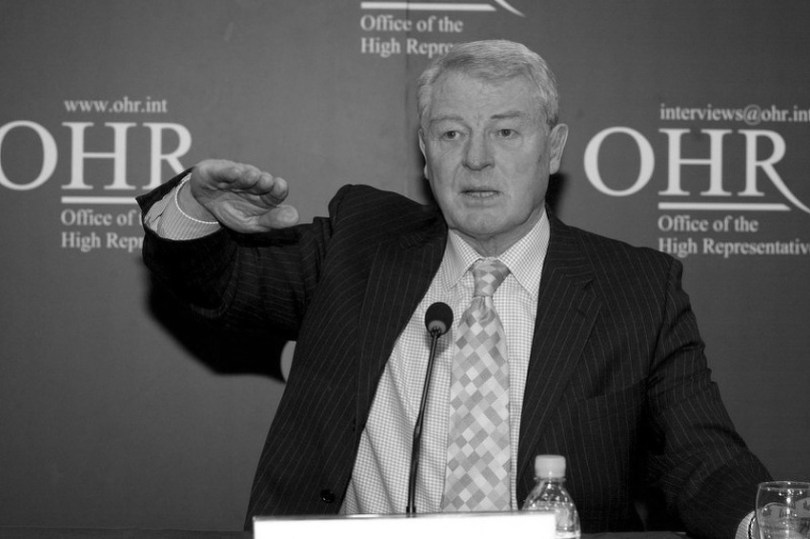
Lord Paddy Ashdown, former leader of the British Liberal Democrats and from 2002 to 2006 High Representative (HR) of the International Community in Bosnia and Herzegovina (BiH), has died aged 77. While British obituaries (see, for example, here and here) focus on his impact on domestic politics and credit him with turning the Liberal Democrats into a true political power in Westminster, people in the Balkans remember his engagement in their region. During the war in Yugoslavia, he visited the besieged city of Sarajevo and, after a dinner in London, he leaked to the press a map Croatia’s president Franjo Tuđman had drawn on a menu, outlining the planned partition of BiH between Serbia and Croatia.

Paddy Ashdown became interested in Yugoslavia after the 1992 elections in Britain, when he felt bored during the honeymoon period of the new government and a colleague suggested: “You know a bit about wars, Paddy. If you are so bored, why don’t you go out and have a look at the one that has just started in Yugoslavia?” By his own admission, he “knew so little” about Bosnia when, some ten years later, he assumed the position of High Representative. When Tony Blair sought support from his European allies for Ashdown’s candidature, one of them asked him whether Ashdown was “really up to such a difficult post”, to which Blair is supposed to have replied: “Look, this guy led the British Liberal Democrats for eleven years. After that, Bosnia will be a doodle.”

As High Representative he was tasked with implementing the civilian aspects of the Dayton Peace Agreement. It is in this role that he is most remembered in Bosnia, for apart from Carlos Westendorp, the second High Representative who introduced the instrument of the “Bonn powers” – the powers to decree legislation and remove domestic obstacles – into the peace and state building toolbox of the international community, it was Ashdown who arguably had the most lasting impact on BiH’s post-war development.

I’ve met Paddy Ashdown a few times, for the first time in 2012, when I interviewed him for my PhD thesis about the policy of the Office of High Representative (OHR) in post-war BiH. I remember him coming to collect me in the peer’s entrance waiting area of Westminster palace, looking around the room and, after the clerk seemed to have forgotten where I was sitting, shouting in his deep voice: “Gospodine Merdžanović, gdje ste?” During his time in Bosnia, he had learned the language. We shook hands and took the tiny elevator one floor up to his office, where he immediately started talking about Bosnia and the many friends and allies he had, and still has in this country.

During the interview, he told me: “I genuinely love Bosnia. And I love the Bosnian people in all of their forms. They remind me so much of my own country. (…) I just wanted to make the place better.“ While many internationals have professed their love for Bosnia, with Ashdown, you somehow believed him.

Maybe this was also because of his charisma, which you could not miss when talking to him. He was a natural politician, always trying to charm the voter, interviewer, or citizen, thereby building up popularity that, later on, he could trade for something else. As he explained with respect to his policy as High Representative: “Popularity is something you build up so that you sell it to get things done. So, I knew very well that if I was going to bypass some of the roadblocks from the old politicians, who would block what I would do, I had to get behind them to the people. So I made it deliberately a policy of mine to go out and meet with the people.” This was a strategy not all HR shared. Wolfgang Petritsch, Ashdown’s predecessor, for example, told me: “I always told him: Paddy, you don’t have to get elected.”

His idea of the High Representative’s role was one of firm leadership, leading to the accusation of him being a “European raj”. Aware of his image in this respect, right at the beginning of the interview he told me: “Although I am much recognised for having used the Bonn powers extensively, I used the Bonn powers to introduce legislation less than any of my predecessors. (…) In all the things I wished to do I was going beyond Dayton. There was a key phrase in my speech, which I said: Dayton is our foundation, it cannot be our ceiling. So, in all of those things that I did, in all of those things that I think were important because of my mandate there – they all had to be done with the agreement of the local politicians.”

Ashdown did indeed use the Bonn powers more than any other High Representative, and he did use them in legislative ways as well. He was always more the hands-on pragmatist than the theoretician or ideologue in his dealings within BiH. For him, progress in the country was always measured in absolute, not relative terms; outcomes represented the justification for any kind of action by the international community.

When he assumed office, he emphasised his goal to create “the outline structure of a modern, light-level state, governing a highly decentralised country”. His three priorities were: establishing the rule of law, getting the economy moving, and beginning to tackle high-level corruption in the country. One of his major foci was the collaboration with the International Criminal Tribunal for the former Yugoslavia (ICTY) in The Hague, where he used the full force of his mandate to secure cooperation – and punish the lack of it. But he also sought to get the economy going, most famously by establishing the “bulldozer commission” that was to detect the most obvious obstacles to doing business in BiH that could be removed by legislative means.

This combination of goals became known as the “Justice and Jobs” reform programme, into which Ashdown cajoled the domestic elites. His approach in BiH relied on the carrot of European integration – in close cooperation with Chris Patten, who at that time was responsible for enlargement in the EU Commission – and the stick of Bonn power intervention. As he said to the newly elected BiH parliament in 2002, after the non-nationalist coalition had lost the elections and the nationalist parties had returned to power: “So, the choice is not whether to reform. But how fast, how soon and, above all, who will drive the process of reform – you or me?” As it turned out, it was him who would be the main driver of reform in BiH.

Ashdown’s legacy in this respect is impressive. Among his major achievements belong the introduction of a state-wide VAT, significant progress in terms of the establishment of the rule of law, the handing over of responsibility for refugee and property return to the Bosnians, the unification of the armed forces under the command of the central state presidency, and the general strengthening of the common state structures. It is precisely this last point, together with his tough line on ICTY cooperation, that has earned him much criticism from the Bosnian Serbs. As he said to me: “You won’t find the Serbs thinking I was a very good High Representative? Well, of course not. They wanted to hang on to Republika Srpska and I wanted to make sure that they lived in a state, not in an entity.”

The notion of absolute progress that Ashdown pushed, however, had a significant downside for the system of political cooperation in Bosnia. The High Representative assumed far-reaching duties, relieving the domestic elites from the burden of having to come to compromises by themselves. Political obstruction and political progress seized to be contradictions and became simultaneously possible, which made the OHR a crucial element of everyday political life. The effects of this structural change would become evident later on, when OHR pressures faded, for one reason or another, and political blockades ensued. This is also part of Ashdown’s legacy in BiH. And he was aware of that as well: “The temptation for somebody in Bosnia with those kind of powers is to use the powers to get things done quickly. And I always used to ask: if I do this, is the advantage of getting things done quickly worth the price I have to pay, which is creating dependencies within the structure? Perfectly fair argument. And the whole thing comes down – and I’m not saying I always got the balance right – but the whole thing comes down to a careful judgement about those two things.”

With Paddy Ashdown’s passing, Bosnia and Herzegovina loses an unapologetic defender of the country’s sovereignty and territorial integrity and a strong advocate for the country and the Western Balkans in the United Kingdom. While we did not always agree with him, his death is certainly a great loss for all us.

A few thoughts on the Western Balkans summit in London

Western Balkans Summit London 2018

The latest summit of the so-called Berlin Process, an inter-governmental forum set up following a German initiative five years ago, was held in London on 9/10 July 2018. This year’s gathering is unlikely to enter the history books, for it managed to achieve even less than the pessimists predicted. There is no sugar-coating this, the evidence is overwhelming, so let us say it outright: the summit was a failure. It failed on three accounts: (a) the host; (b) the event; and (c) the results. But the failure is not Britain’s fault alone; quite to the contrary, the current result fits the profile so far. The Berlin process was hardly ever anything more than a photo-opportunity for the domestic and European elites. It never actually achieved much and this year’s failure was somewhat predictable––as is next year’s.

But let’s look at these points one by one.

(a) The host: Why Britain?

From the beginning, one question loomed over this year’s Berlin Process summit like no other: Why Britain? After all, the UK is set to exit the European Union, while the Western Balkan states wish to join it. The Berlin Process sought to provide the WB6 (as the six states are generally called) with a mechanism for economic, infrastructure and political cooperation, mutual exchanges, and reform in light of the fact that EU membership was far away for all of them. It was a process supposed to supplement EU integration efforts by focusing on what could be done in the meantime. In other words, it is intrinsically linked to EU membership. As host, the UK thus faced a big credibility issue.

However, in the past few months, it seemed the UK officials were somewhat unwilling to see this point. When confronted with it, they would often say that, of course, the UK has a role to play in the Balkans; after all, a stable, democratic, and economically prosperous Western Balkans is in its own interest, regardless of Brexit. The UK had something to contribute here, one was told; someone questioning British engagement in this area was accused of supporting the alternative, which was seen as the region outside the EU.

Of course, such a line of argument is nonsense. Even if you agree that EU membership is the only way to sustainably secure a stable, democratic, and prosperous Western Balkans––as most of people engaged in this field do––you can still think that a country set to exit the EU is probably not the best advocate in this regard. The problem is not the message, it’s the messenger. And of course, is true that there are areas where the UK can actually positively contribute to the region’s progress (see here). But the problem is that the UK seems to have overestimated its influence. The economic ties between the Western Balkans and the EU are marginal and the WB diaspora community in the UK is small, compared to those from other areas. Also it is important to remember that the citizens of the WB6 countries still need visas to enter the UK, which made participation in the preparatory meetings somewhat challenging.

There was a logic in having the UK host, however, for the invitation had been extended before Brexit. Furthermore, the UK was among the initial drivers of the reform agenda in Bosnia and Herzegovina, which started with the Anglo-German initiative. But if the actual event shows one thing, then that Brexit and the state of the UK government should have led to a rethinking of this strategy.

(b) The Event

Before the summit, the Foreign and Commonwealth Office (FCO) put a lot of efforts into making this meeting a success. A special department was set up to deal with the preparations and the recruited officials took their preparatory work very seriously. They held different meetings and seminars with experts on the region, both in the UK and in the region itself, and they listened to what the experts had to say. Often times, they agreed with the concerns raised. In addition, a whole lot of work was done behind the scenes to strengthen administrative cooperation between the UK and the WB6, particularly in the area of law enforcement, so as to create a positive climate for the summit itself.

But the FCO officials were somewhat constrained by the summit’s format, which presumably prevented them from taking on board the broader implications of the challenges in the region. Early on, they decided fo focus on the three themes: increasing economic stability, strengthening regional security cooperation, and facilitating political cooperation. Repeated efforts to introduce equally important topics like the rule of law fell somewhat on death ears.

And then, of course, came the day of the summit itself. As a result of a disagreement with the cabinet’s newest Brexit strategy––the Chequers agreement outlining a softer version of Brexit––the Foreign Secretary Boris Johnson resigned on the day he was supposed to greet the Foreign Ministers of the WB6 countries. Alan Duncan, the Minister responsible for Europe, stepped in, while Theresa May found herself in a situation in which she had to secure her position as Prime Minister by addressing parliament and holding extra meetings with her party and her cabinet. If this episode demonstrated anything to the WB6 leaders, then that the Western Balkans was certainly not a priority for the UK government, especially not at a time when the government itself seems unstable. They must have felt like invitees to a party at which the host couple decided to split up and one of them had to carry on as if nothing had happened while the invitees decided to partake in that illusion out of politeness.

(c) The results

Of course, the London summit produced many results, particularly declarations of intent and respective agreements. The heads of state agreed to a “Joint Declaration on Regional and Good Neighbourly Relations”, a “Joint Declaration on Missing Persons”, and a “Joint Declaration on War Crimes” (see the documents here).  The interior ministers confirmed their intensions to further strengthen information exchange on serious organised crime and other security threats; to further cooperate in tackling the illicit possession, misuse and trafficking of firearms; to deal with human trafficking and the smuggling of migrants; and to deal with corruption (see here). They also agreed to establish a “Berlin Process Security Commitments Steering Group” to oversee the commitments, headed by the UK (see here). And the Foreign Ministers basically reiterated the positive developments in the region in the past year and congratulated themselves for the great job they had done (see here). (Note that the conclusions of the meetings are not “joint conclusions” but the “chair’s conclusions”, which in diplomatic terms do not require general agreement.)

In addition, the UK used the stage to announce changes in its Western Balkans policy (see here) which included a doubling in UK funding to the region from the Conflict, Security and Stability Fund, as well as a doubling of UK staff in the region dealing with security issues affecting the UK. Furthermore, the UK committed £10 million for digital education among young people; this is a programme run through the British Council from which 4,500 schools will benefit.  In addition, the UK promised £1 million to help address legacy issues in the region, especially emphasising the issue of missing persons in this context, which also had a particular importance during the summit.

Looking at these results, they seem underwhelming. What was agreed is declaratory with no possibility of monitoring, even if the Steering Group is supposed to perform such a function on a limited basis. Apart from the UK committment, which at times seems very self-serving and could have been made at any other time, there seems to be nothing new or substantial that the WB6 and the EU leaders agreed upon.

The future

All of this actually leads us to ask one important question: so what? And indeed, the situation in the Western Balkans would not have changed if this meeting hadn’t happened––and it will not change for it having happened.

But this is not Britain’s fault, even if its domestic events on the day ruined the photo-opportunity that many Balkan leaders had hoped this meeting to be. From the beginning, the WB leaders saw these meetings as part of their legitimacy-increasing strategy, i.e. an opportunity to boost their local profile and present the domestic public with the impression that things are moving forward. Their primary concern was to secure infrastructure and other investments, which is why they accepted each host country to add new issues to the agenda, which they knew would be of little or no consequence. Or do you remember what happened to the Environmental Agenda of the Paris summit, for example?

The most well-known result of the Berlin Process so far has been the establishment of the Regional Youth Cooperation Council (RYCO), which is supposed to further exchanges between the youth of the six countries. It recently finished its first call for applications and seems on a good path towards delivering on its mission. But it’s mission is limited, and should remain so. RYCO cannot act as a substitute for solutions to the many challenges the region is facing. It should not be overburdened with other issues, like reconciliation for example. The other, far lesser-known institution to emerge out of the vicinity of the Berlin Process is the Western Balkans Fund. Set up by the six WB states and financed by their Foreign Ministries, the fund aims at supporting common regional projects in the areas of education, science, culture, cross-border and youth cooperation as well as sustainable development.

However, the Berlin Process’s largest mistake so far was not its relative inconsequentiality. It was that the drivers of the process, the EU countries, used it for other purposes than the Western Balkans. The decision not to take the summit away from the UK this year must probably be seen in light of the ongoing Brexit negotiations in which Germany did not want to unnecessarily offend the UK. And the decision to invite Poland to host the summit next year reportedly followed the wish to better include Poland in important EU matters. I don’t suppose the rule of law will be on the agenda there.

Despite this decision, which could blow up in the EU leader’s faces in a similar fashion the London summit did, I think the Berlin Process is a good thing to have overall. Its structure might be cumbersome, but at least it puts the Western Balkans on the agenda in important EU capitals. It thereby manages to escape the even more complex framework of EU-led gatherings, which could also be criticised in a similar fashion. Also, the civil society gatherings and meetings around and in between the summits can act as important venues for cooperation among the region’s representative and also as a vehicle for further EU engagement with the Western Balkans. In this sense, it may be more about the journey than the destination.