
The last few weeks saw a peculiar circularity in international relations related to Bosnia and Herzegovina (BiH), an in particular the international community’s Office of the High Representative (OHR), which still fulfills its guardian function in the Western Balkan country. On 6th April 2026, Christian Schwarz-Schilling, High Representative (HR) between 2006 and 2007, died aged 95 in his German hometown of Büdingen, near Frankfurt. In mid-May, we learned that Christian Schmidt, who since 2021 occupied the HR post, was resigning, which had already been rumored in diplomatic circles the past few months. While history and political science will write two rather different accounts on the merits of their respective terms in the OHR, the way in which both men were de facto forced to leave office shares a particular commonality: the American factor. And a look at their terms offers us a way forward for the future of the OHR in BiH.
The tragedy of Schwarz-Schilling
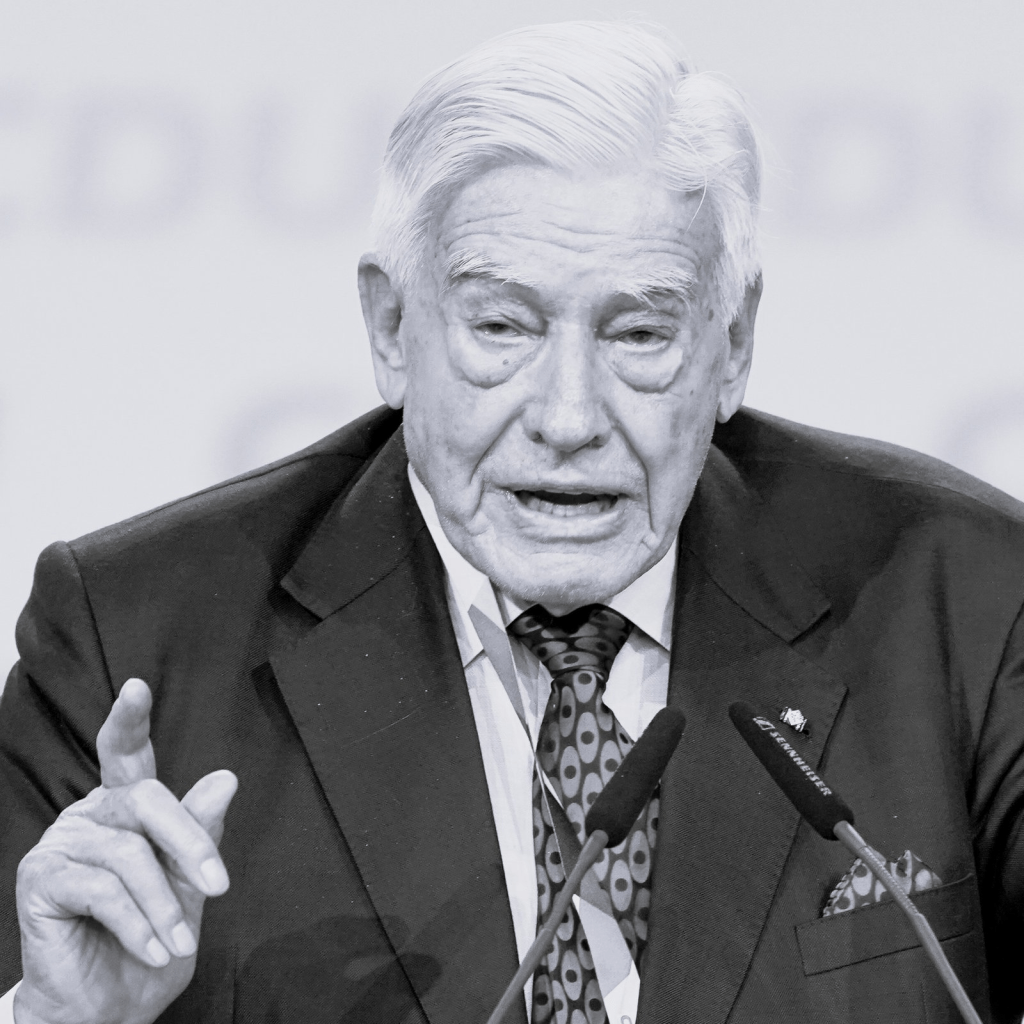
Christian Schwarz-Schilling
When Christian Schwarz-Schilling assumed the Office of the High Representative in 2006, he followed a figure that to this day remains larger than life in Bosnian political history: Lord Paddy Ashdown. In policy terms, Ashdown had a significant impact on BiH’s post-war development: the introduction of a state-wide VAT, significant progress in terms of the establishment of the rule of law, the handing over of responsibility for refugee and property return to the Bosnians, the unification of the armed forces under the command of the central state presidency, and the general strengthening of the common state structures are among his major achievements. Even if largely inaccurate, it is commonly assumed that Ashdown achieved all these things by using the so-called Bonn powers, the HR’s right to directly intervene in the country by imposing new laws or removing from office elected politicians if he sees fit. One does not need to debate the merits of such a claim–I’ve done that elsewhere–but one needs to acknowledge that when Ashdown left the office in 2006, the general impression was that the country was largely functioning and on the way to be self-governing rather soon. And it is this impression that became the nucleus of Christian Schwarz-Schilling’s tragedy.
When Schwarz-Schilling assumed office, the Bosnian magazine Slobodna Bosna wrote in a headline: ‘the administrator goes, the friend comes’. Indeed, Schwarz-Schilling was known to the Bosnian public due to his engagement as the international community’s mediator for the Federation between 1995 and 2004, his humanitarian actions in the country during the war, and especially his resignation from the cabinet of Helmut Kohl in 1992, explicitly stating that he would be ashamed to be part of the cabinet if inactivity in the Balkans prevailed. Schwarz-Schilling was an elder-statesman type of politician, respected by many in the country and generally well-received. Remember, this was the time when the April package, a set of reforms to the constitution and the structure of the Dayton Peace Agreement, seemed possible and people like Milorad Dodik, the at the time future and currently former president of Republika Srpska was still in opposition and not the nationalist hardliner he would later become.
Schwarz-Schilling assumed the post fully willing to be the last High Representative in Bosnia–a prospect particularly promoted by the administration of George W. Bush. At the time, the US found itself engaged in two wars following the attacks of 9/11. While the war in Afghanistan in 2001 had generally been backed by the international community, the war in Iraq proved to be a quite controversial endeavour, with especially Germany and France opposing it. The US administration needed a case for international intervention gone well, and Bosnia was to become that poster child. The Dayton Peace Agreement ended the war in 1995, the international community entered the country in 1996, quasi-governed it until 2006, and now, ten years later, the country was self-sufficient and the international community could leave. Bosnia was to provide the blueprint of an exit strategy for the US interventions in Afghanistan and Iraq. A success story proving the long-term strategy right.
But if Bosnia was to be self-sufficient, Schwarz-Schilling concluded, that meant that the country could not be run by the OHR. It meant, in his mind, that the concept of ownership, first promoted by his predecessor Wolfgang Petritsch in 2001, was to be taken seriously. Gone was the Ashdown approach of imposing political reforms. The HR could provide cover for negotiations, he could cajole and mediate, but it was not up to him to decide. As he told me when I met him in Germany in 2012,
I said to the local politicians: ‘Ownership is the rule! You are the ones [to decide] and I will only intervene if there is a danger for the people, or if some issue becomes os big that I deem it necessary to prevent further harm. But [I will] always [intervene] in a way, which allows you to correct my decisions if you deem them wrong.’ And you see, I thought such intervention always as some sort of educational process. And such a process was badly needed in my opinion. But the international community was unable to understand what that meant.
The failure of the April package opened up the opportunity for Milorad Dodik to embark on a nationalist electoral strategy. During the subsequent election campaign, he openly threatened with secession, a trope that would become standard in all subsequent campaigns. The international community, used to Bonn power interventions by Ashdown, urged Schwarz-Schilling to intervene. But Schwarz-Schilling stuck to his educational approach. In a democracy, he believed, you may say whatever you want, especially in election campaigns. Talk is not punishable, only actions are. So, he made it known that rhetoric would not provoke any action from his part, but any concrete steps towards undermining the state would.
When Dodik’s strategy proved successful and he won the 2006 elections with his nationalist rhetoric, he had the Republika Srpska parliament pass a resolution that there would be a referendum on independence if the abolition of Republika Srpska remained on the negotiating table. His red line having been crossed, Schwarz-Schilling wanted to act and remove Dodik. But the international community saw him legitimised by the elections and directed Schwarz-Schilling not to intervene. As Schwarz-Schilling told me, it was particularly the US and UK administrations that wanted him to remain silent—not just because of the electoral result, but also because of the situation in Kosovo, where negotiations were on the way that would lead to the country’s independence. ‘If one wanted to make progress there, one could not open a new front here.’
Within a little more than a year after Ashdown left, Bosnia had a secessionist politician in charge of Republika Srpska, a failed constitutional reform package, and an HR that was not willing to intervene in daily politics, thus effectively provoking political stalemates. The success blueprint of international intervention was in danger. While the international community could not (or would not) change the first two of these things, the international community could change the third: Early in 2007, it was leaked that Schwarz-Schilling was to leave the post, essentially making him a lame duck. His mediated, ownership-focused approach was not what the international community wanted to see. Schwarz-Schilling felt sabotaged by the international community, especially by Germany’s inaction in this regard. The secret negotiations he started with the local politicians after the failure of the April package stalled, as he was forced to leave. The question remains what could have been if the international community had accepted his approach. In Schwarz-Schilling’s words: ‘Stupid as it may be to say this now: the country of Bosnia and Herzegovina would have become a different one if I had three more years.’
The inaptness of Schmidt
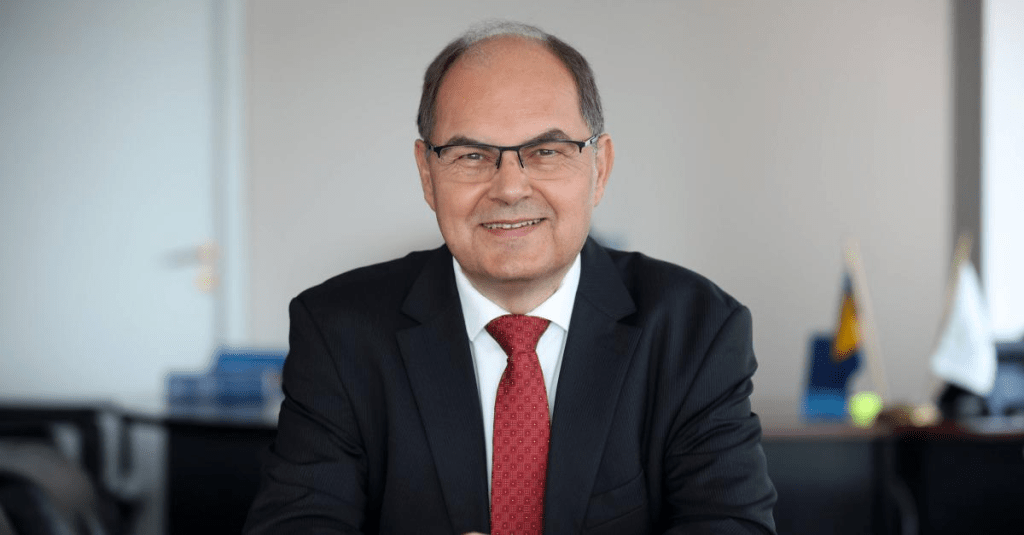
Christian Schmidt
Whereas Christian Schwarz-Schilling had been greeted by Bosnians as an elder statesman and friend in 2006, when Christian Schmidt assumed the OHR in 2021, there were no such feelings of familiarity. The general impression was that the former German agriculture minister had been sent to Bosnia to be removed from German politics, following his controversial vote to allow Glyphosate in the EU. Furthermore, his close associations with Croatia and the Croat HDZ party, which is a member of the European People’s Party in the European parliament, just linke Schmidt’s CSU, raised concerns about Schmidt’s neutrality in the post. Lastly, questions about his temper soon emerged, especially when he verbally attacked a journalist during a press conference in Sarajevo. Put mildly, his critics describe Schmidt as an inapt diplomat who favours the Croat position.
At the time Schmidt assumed office, his predecessor Valentin Inzko had effectively made the OHR a lame duck, an institution that did not actively intervene in the country’s politics anymore, but limited its engagement to ‘expressing concern’ when dangerous political situations arose. As one politician told me at the time: ‘We like hanging out with Inzko, but politically, nobody takes him seriously.’ This lead some–me included–to ask what the point of the OHR was at all. This would definitely change with Schmidt, who restored the OHR and especially the Bonn powers to the former glory of the Ashdown years.
Between 2011 and 2021, the OHR had effectively not used its Bonn powers to any meaningful degree. The only decisions between 2011 and 2014 concerned the restoration of rights to people formerly targeted by Bonn power decisions, and since 2014 there were no decisions at all. Between 2021 and 2025, however, Schmidt imposed no fewer than 26 Bonn power decisions. The OHR was back, big time!
The most significant decisions centred on two specific issues: elections and Dodik.
In 2022, BiH was called upon to elect new parliaments on the state, entity and cantonal levels. Deeming the country essentially ungovernable due to consistent political stalemates, Schmidt has sought to amend the Election Law by domestic consent prior to the elections. His negotiations failed, however, as his proposals were deemed to favour the Croat electorate, particularly the HDZ, disproportionally. In addition, changing the Electoral Law after the list of candidates had already been submitted, was highly undemocratic and unusual. As I told Der Standard at the time, you cannot change the rules of the game once it has begun. How wrong I was, for Christian Schmidt proved that in a member state of the Council of Europe and a state aspiring to become a member state of the European Union thus committed to the Copenhagen criteria of democracy and rule of law, you could actually change the rules even on election night.
As the polls closed on Election Day, Christian Schmidt addressed the citizens of BiH to congratulate them on going to the polls. Additionally, he told them that while all their votes will be counted, he had decided to change the way in which indirectly elected or delegated legislative positions in the Federation are allocated. In other words, he had changed how votes transferred into seats and thus how voting impacts representation in the legislature. A move so blatantly undemocratic that it beggars belief. Regardless of the content of the changes–which some saw as benefitting the nationalist elites, above all the Croat HDZ–changing the Electoral Law after the votes had been cast and not yet fully counted should not be possible, not even for a body like the OHR. Later on, Schmidt would directly intervene in the government formation in the Federation entity by suspending the entity’s constitution for a day so that a new government could be formed. The long-term effect of undermining the democratic character of the country, and the Dayton Peace Agreement itself, cannot be overstated. This is a move that was not even necessary in 1996, when the first elections were held under much more dangerous circumstances.
The second set of significant impositions concerned changes to the Criminal Code, which aimed at criminalising the incitement of violence, the glorification of war criminals, bribery in elections as well as the failure to implement decisions enacted by the High Representative. This set of changes was what ultimately allowed the Bosnian institutions to remove Milorad Dodik from office. After the Republika Srpska parliament had passed a resolution rejecting decisions by the HR and the HR had annulled them, Dodik went on to nevertheless sign the resolution into law. This opened up the opportunity for a two-year long criminal case against him, at the end of which he was convicted for failing to obey the OHR decisions. While Dodik was able to substitute his prison sentence with the payment of a fine, the court’s prohibition against holding public office meant that he was effectively removed from office. After a few tense months, Dodik accepted his removal; shortly afterwards, the US sanctions that had been imposed against him in the past, were lifted. Up to this day, however, Milorad Dodik remains one of the most influential politicians in Bosnia and Herzegovina, despite his formal removal from power.
The reasons behind Schmidt’s resignation are not entirely clear at the moment. What seems certain, however, is that there was big US pressure for him to be replaced. One reasons behind this pressure might be the constant lobbying pursued by the Dodik administration in the US, not least as a result of Schmid’s actions that ultimately led to Dodik’s downfall. Another reason might be Schmidt’s opposition to a pipeline project linked to people close to the US president. History will tell.
Why we need a new strategy for the OHR
Whatever the reasons behind Schmidt’s resignation, like with Schwarz-Schilling, US pressure and German abstention sealed the fate of the second German High Representative in Bosnia and Herzegovina in the end. Schwarz-Schilling had sought to take the concept of domestic ownership seriously, while Schmidt had sought to impose policy he saw as necessary. Both approaches failed, but while Schwarz-Schilling’s had at least the dialectical potential of advancing the country and was teleologically aimed at installing democratic values, Schmidt’s reforms did serious harm to the concepts of democracy and democratic legitimacy, while his apparent or perceived partisanship damaged the credibility of international engagement in the country.
So, what is the conclusion we need to draw with respect to the OHR and its future? I’ve long been critical of the OHR’s contemporary role, even if I could never bring myself to advocate its permanent closure. Today, as we face a world dominated by realist international politics in which the strongest players need not obey by any principles anymore, the OHR seems, at best, a relict from a distant, Fukuyama-inspired past and, at worst, a direct instrument of international power politics à la Mearsheimer and Co. Both options are not a very good prospect for the country.
Some argue that the OHR has a role to play as long as the Bosnian political system harbours the possibility for blockades by domestic politicians; the HR is needed to overcome such domestic stalemates. But at the heart of such an argument stands the negation of any kind of agency for the domestic political elites. They are not incapable of reaching compromises due to the political system; they are incapable of reaching compromises because the costs of inaction inexistent. Neither electorally nor in terms of finances are they punished for inaction. It seems clear that the days of the OHR are numbered. Both democratically and politically, such an institution has long outlived its legitimacy. Politically, as the past few years of renewed Bonn power action show, the OHR has very little to show for. Dodik is out of office, but still in power. And in terms of policies, one struggles to find anything worth mentioning as an achievement.
So, yes, the OHR must close. But before it does, it needs to make one final imposition: The tying of the disbursement of state funds to politician and other public official to legislative activity. The idea is simple: Without political agreement, say, on the budget, the political actors are starved of income. Unlike in the US, this should not be an overall state shutdown, but a targeted action. Here, Christian Schwarz-Schilling offers a blueprint. When eight months after the 2006 elections, there still was no government formed in the Herzegovina-Neretva canton, to which the city of Mostar belongs, he issued a decision suspending the disbursement of party funding to the involved parties from state and entity budgets. The larger parties lost 40% of the funding, the smaller 20%. Additionally, the decision contained a provision that party funding would be cut by a further 40% and 20%, respectively, if a government was not formed within ten days. In the end, this strategy proved successful.
If one were to apply a similar principle to the entire country and integrate it into the existing body of legislation, political stalemates would become costly. Moreover, one would create a new institution for overcoming deadlocks, properly anchored in domestic legislation. Naturally, this is not a panacea for all of BiH’s problems, but it would allow the OHR to be phased out.
Maybe that is the best conclusion we can draw from the fate of the two German Christians in Bosnia and Herzegovina.

